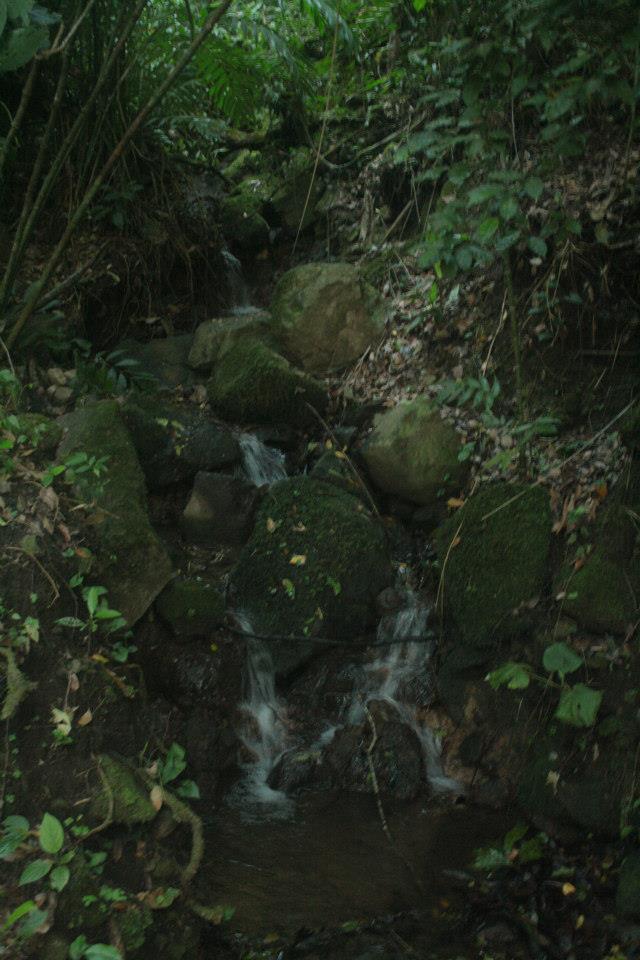
The
paddles swished all but noiselessly in the dark brown waters as our canoe guide took Kathya and I up the tributary in search of wildlife native to Rio San Juan.
It
was holy week and my fiancé and I had decided to visit a lesser seen
area of Nicaragua. Rio San Juan makes up the Southwest corner of the
country. The department is home to the last real rainforests of
Nicaragua, as well as tons of history. Most people that pass through
the region are on their way to Costa Rica, however they are really
missing out on a true Central American gem.
Kathya and I left Managua at seven in the morning on a bus bound for the department capital, San Carlos. The journey was a hot, packed bladder bursting ride through half the country. Our bus was a ruteado, which means they stop literally for anyone that needs a ride. Before we even left the station, the aisle was full of people that were doomed to ride the whole way on their feet.

All
the way there, the bus would stop to literally push more people on
board. Just when we thought we weren’t going to make it, we pulled
into the San Carlos terminal and were finally able to stretch our
legs again.

Kathya’s
family has friends from the church that we were able to call on to
get nice prices for our hotels. We stayed at Hotel Carelys, which
sits about halfway between the city park and the river front. The
upstairs balcony offered quite a view of the roof tops and the lake
beyond them.

After
getting settled in, we went for a walk and found the cannon memorial
that honored the victory of Rafaela Hernandez, 16-year-old girl,
against a hoard of pirate ships that were coming up the river to
attack Granada. Her father had been killed in the battle and she
rallied the men to win. Legend has it that she fired the canon that
sank the lead ship herself.

That
night Kathya and I dined on delicious fish in one of the best
restaurants in town, Kaoma. The service was surprisingly fantastic,
and the food wasn’t left behind. I had the restaurant’s name
sake plate, fried kaoma fish. The restaurant sits about a block away
from the fishing docks so you know that fish was fresh. After that,
we danced the night away in the clubs of San Carlos. But the morning
would come soon and the pangas, small passenger boats, wait for no
one.
This was only the beginning of our 3 night semana santa vacation. I couldn’t see a better way to start it off. The next day we headed out bright and early for El Castillo.
The
day after our introduction to Rio San Juan, it was time to see the
river that made this place so famous and important.
After a short stop
in Los Sabalos, we approached the Devil’s Rapids as the Spanish
name translates. They didn’t really live up to the name in my
opinion, but we did have to slow down to a crawl so as to not hit the
sharp rocks that would have left us gashed wide open.


Finally
we arrived in the final destination, El Castillo. This is a tiny
little hamlet where not a motor is to be heard by town ordinance. It
is definitely the most secluded place I have been to in all of
Nicaragua.

After
checking into Hotel Victoria, we made arrangements for a canoe tour
of a local tributary. But that was for later, the morning was for
seeing the castle that made this tiny little pueblo so important.

We
hiked our way up the hill and found the entrance to the fortress, La
Concepción. After paying a small entrance fee we were free to
wander the area. First there was a little museum with artifacts that
covered the ages of the region. There were also pictures of the
excavation and restoration of fortress.

Then
it was time for the big show. Kathya and I were snapping pictures
everywhere of the stone walls, the little courtyard and the cannons
trained on the river, ready for another pirate attack.

When
we made it back to the hotel, our guide was waiting for us. We made
a quick change of wardrobe, I grabbed my long lens and we came out to
the river front.
Rio
San Juan is an animal lover’s heaven. The region has one of the
largest bio reserves in the country, Indio Maiz. Everywhere, there
are long necked cranes and other brightly colored water fowl. At the
proper times of year, the river becomes home to many migrating birds
of paradise.


The
waters won’t be shown up by forests. Under the calm surface, huge
tarpons swim alongside river otters. The river is also home to more
frightening creatures. Our guide told us horror stories of child
snatching alligators and fresh water bull sharks.


In
the shade of the groves, Kathya, our young guide and I sat back and
sipped on ice cold coconuts, nibbled on fresh fruit and tasted the
local product, handmade cacao fudge. Finally the waters became too
shallow for us to make our way up any farther. We came about and
began the forceful push to get back up the river to El Castillo
before dark.
 When
we arrived, the lights were out but there was still enough sun to
have dinner. So we sat down in El Chinandegano and had some fantastic jalapeño steaks and a few ice cold toñas to finish the night. Kathya and I sat in the dark after eating. We listened to the quiet murmur of the river and the less than quiet croaking of all the different types of frogs and toads.
When
we arrived, the lights were out but there was still enough sun to
have dinner. So we sat down in El Chinandegano and had some fantastic jalapeño steaks and a few ice cold toñas to finish the night. Kathya and I sat in the dark after eating. We listened to the quiet murmur of the river and the less than quiet croaking of all the different types of frogs and toads.
The
next day we had a quick breakfast and then made our way back up
river. We spent a laid back day in San Carlos. We saw so much on
this trip, but so much more was left out. As we got on the bus for 7
hour return, I remember thinking that we’re not done here.



+11.30.17+p.m..png)